본문
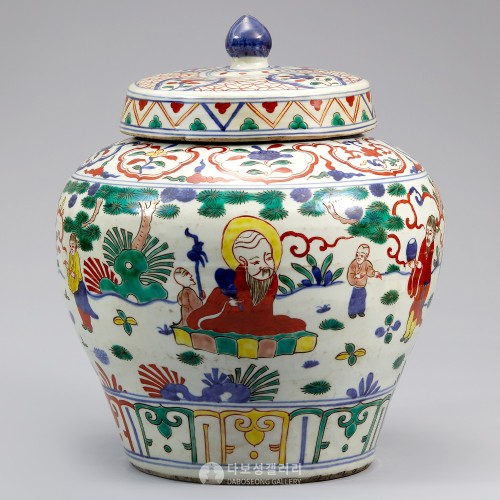
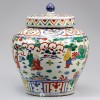
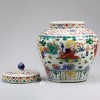
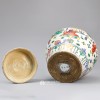
명나라 만력제 을묘년(1615)에 제작된 오채(五彩) 항아리입니다. 구연부와 굽이 넓고 몸체는 풍만하게 부풀어 오른 형태입니다. 굽은 일부 유약을 바르지 않아 태토가 드러납니다. 굽바닥에서는 모래 받침 흔적도 확인됩니다.
문양은 명나라 만력 연간에 성행한 오채(五彩) 기법으로 시문하였습니다. 청화 안료로 일부 문양을 그린 뒤 유약을 입혀 소성하고, 적색·황색·청록색 안료를 덧입혀 다시 구워내는 유상채(釉上彩) 기법을 사용하였습니다. 각 색채는 길상, 권위, 생명력 등을 상징합니다.
뚜껑 상면과 몸체에는 다양한 길상 문양과 인물문을 시문하였습니다. 화훼문과 운문, 기하학문, 변형 연판문 등을 둘렀으며, 몸체 중앙에는 바위 위에 앉은 수성신(壽星)을 중심으로 소나무와 신선 등을 배치하였습니다. 수성신은 도교의 복록수 삼성(福祿壽三星) 가운데 하나로, 장수를 상징하며 돌출된 이마가 특징입니다.
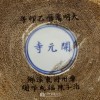
굽바닥에는 '大明萬曆乙卯年(대명만력을묘년)', '開元寺(개원사)', '漳州府東溪鄕 治子陈福成叩謝(장주부 동계향 치자 진복성 공사)' 명문이 남아 있습니다. 이를 통해 명 만력 을묘년에 장주부 동계향 출신의 장요(漳窯) 도공 진복성이 제작하여 취안저우 개원사에 봉헌한 사실을 알 수 있습니다. 제작 연대와 봉헌 장소, 제작자 등을 구체적으로 확인할 수 있어 역사적 가치가 높은 유물입니다.
━━━━━
此为明代万历乙卯年(1615年)制作的五彩罐。器物口沿与圈足较宽,腹部丰满鼓起,整体造型端庄稳重。圈足部分局部无釉露胎;足底可见明显的垫砂烧造痕迹。
纹饰采用明代万历时期盛行的五彩工艺装饰而成。其制作方法为先以青花颜料绘制部分纹样,施釉后高温烧成,再于釉面加绘红彩、黄彩、青绿色彩料,经二次低温烧制完成,属于典型的釉上彩工艺。各色彩分别寓意吉祥、权威与生命力等美好象征。
盖面及器身绘有丰富的吉祥纹样和人物图案。周围环绕花卉纹、云纹、几何纹及变形莲瓣纹等装饰。器身中央以端坐于山石之上的寿星神为主题,两侧配以松树及仙人等形象。寿星神为道教“福禄寿三星”之一,象征长寿,其最显著的特征为高耸突出的额头。
圈足底部留有“大明萬曆乙卯年”“開元寺”“漳州府東溪鄕 治子陈福成叩謝”等铭文。由此可知,此器为明代万历乙卯年(1615年)由漳州府东溪乡出身的漳窑陶工陈福成烧造,并奉献于泉州开元寺。该器明确记载了制作年代、奉献地点及制作者姓名,因此具有较高的历史研究价值。
━━━━━
This Wucai jar was made in 1615 during the Wanli reign of the Ming dynasty. It has a wide mouth rim and foot, with a generously rounded body. Parts of the foot are left unglazed, exposing the clay body beneath. Traces of sand supports used during firing can also be seen on the base.
The decoration was executed using the Wucai technique, which flourished during the Wanli period. Portions of the design were first painted in underglaze cobalt blue, then glazed and fired. Red, yellow, and turquoise enamels were subsequently applied and fired again using the overglaze enamel technique. These colors symbolize auspiciousness, authority, and vitality.
The lid and body are decorated with a variety of auspicious motifs and figural scenes. Floral motifs, cloud patterns, geometric designs, and stylized lotus-petal borders encircle the vessel. At the center of the body is Shouxing, the God of Longevity, seated on a rock and surrounded by pine trees and immortals. Shouxing is one of the Daoist deities associated with longevity and is distinguished by his prominently protruding forehead.
The base bears the inscriptions “大明萬曆乙卯年,” “開元寺,” and “漳州府東溪鄕 治子陈福成叩謝.” These inscriptions indicate that the jar was made in the yimao year of the Wanli reign (1615) by Chen Fucheng, a potter from Dongxi Township in Zhangzhou Prefecture, and dedicated to Kaiyuan Temple in Quanzhou. The vessel is of considerable historical significance because its date of production, place of dedication, and maker can all be clearly identified.