본문
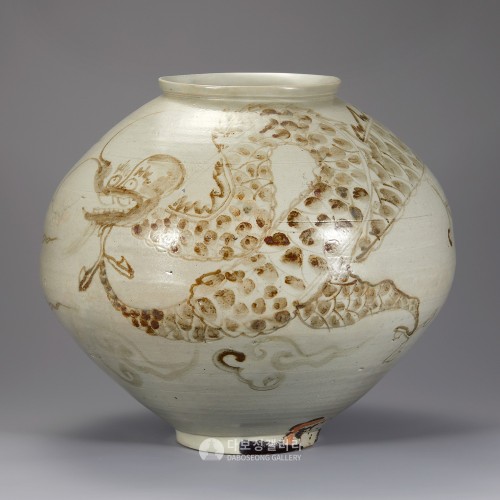
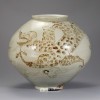
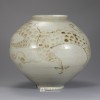
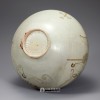
회백색 유약 위에 철화 안료로 용과 구름을 그린 17세기 백자 호입니다. 외반한 구연과 짧은 경부, 풍만한 동체의 형태입니다. 표면에는 물레 성형의 회전 자국이 남아 있습니다. 굽바닥은 비교적 낮고 평평하며, 모래를 받쳐 구운 흔적이 남아 있습니다.
전면에는 구름을 헤치며 비상하는 용이 그려졌습니다. 이 용은 발톱이 세 개인 삼조룡(三爪龍)으로, 왕세자와 연관된 문양으로 사용되었습니다. 과장된 눈과 둥근 머리, 해학적인 표정은 달마의 모습을 연상시킵니다. 이러한 표현은 절대적 위엄보다 친근하고 생동감 있는 형태를 강조한 것으로, 17세기 철화백자에서 나타나는 도상의 특징입니다. 또한 주변을 둘러싼 운문(雲紋)은 활달한 필선으로 묘사되어 용의 움직임을 부각시키며, 화면 전체에 역동적인 분위기를 더합니다.
이 유물은 17세기 광주 지월리 요에서 제작된 것으로 추정됩니다. 광주 지월리 요는 조선시대 왕실 분원 체제 아래 백자 생산이 이루어졌던 요장 가운데 하나입니다. 당시 청화 안료 수급이 어려워지면서 철화 안료를 사용한 백자가 왕실에서도 활용되었습니다. 이 유물 역시 도상과 형태로 보아 왕실을 위해 제작된 것으로 추정됩니다.
━━━━━
此为17世纪铁绘白瓷壶,在灰白色釉面上以铁绘颜料描绘龙纹与云纹。器物撇口,短颈,鼓腹,整体造型端庄稳重。器表可见拉坯成型所留下的旋转痕迹。圈足较低且平坦,足底残留以砂垫烧成的痕迹。
器身正面绘有一条拨云腾飞的龙纹。该龙为三爪龙,此类纹样在朝鲜王朝时期多与王世子相关。龙的眼睛夸张突出,头部圆润,表情生动而富有诙谐意味,令人联想到达摩的形象。这种表现方式并非强调绝对威严,而是注重亲和力与生命力,体现了17世纪铁绘白瓷中常见的图像特征。环绕其周围的云纹以豪放流畅的笔触绘就,突出了龙的动态,使画面整体充满动感。
此件器物推测为17世纪烧造于光州地月里窑址。光州地月里窑是朝鲜时代隶属于王室分院体系的重要白瓷生产窑场之一。由于当时青花颜料供应日趋困难,铁绘白瓷逐渐被王室所采用。从其纹样题材与器形特征判断,此件器物亦应是为王室所制的作品。
━━━━━
This is a 17th-century white porcelain jar featuring a dragon and clouds painted in iron pigment over a grayish-white glaze. The vessel is characterized by an everted mouth, a short neck, and a voluminous, bulbous body. Traces of the spinning wheel from the forming process remain visible on the surface. The foot is relatively low and flat, bearing the marks of sand supports used during firing.
On the front, a dragon is depicted soaring through the clouds. This is a three-clawed dragon, a motif traditionally associated with the Crown Prince. Its exaggerated eyes, round head, and humorous expression call to mind the image of Bodhidharma. This style of expression, which emphasizes friendliness and vitality over absolute dignity, is a characteristic feature of the iconography found in 17th-century iron-painted white porcelain. Additionally, the surrounding cloud patterns are portrayed with vigorous brushstrokes, accentuating the dragon's movement and adding a dynamic atmosphere to the entire composition.
This artifact is presumed to have been produced at the Jiwol-ri kiln in Gwangju during the 17th century. The Jiwol-ri kiln was one of the kiln sites where white porcelain was produced under the royal Bunwon (official kiln) system of the Joseon Dynasty. During this period, as the supply of cobalt blue pigment became difficult to obtain, white porcelain decorated with iron pigment came to be used even within the royal court. Judging by its iconography and form, this piece is also believed to have been produced for the royal court.