본문
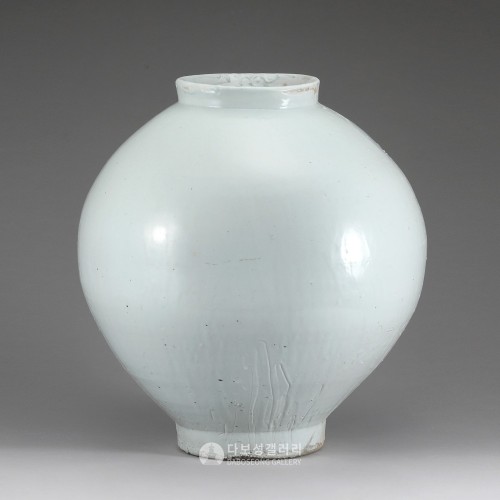
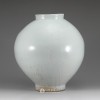
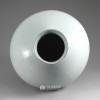
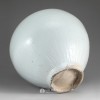
18세기 조선 시대에 제작된 백자 달항아리입니다. 이 백자 달항아리는 높이 52cm의 대형이지만 형태가 무너지지 않고 완전한 균형을 유지하는 보기 드문 사례입니다. 몸체는 찌그러짐 없이 안정적인 곡선을 이루며, 특히 구연부와 굽의 직경이 거의 비슷해 형태의 안정감과 비례미가 돋보입니다. 몸체 중앙의 접합선은 위와 아래를 따로 빚어 이은 전통 제작 방식을 잘 보여줍니다.
명칭은 색감과 형태가 보름달을 품은 듯하고, 높이가 40cm 안팎의 대형이어서 붙여졌습니다. 백자 달항아리는 조선시대의 대표 도자기인 백자 가운데 무늬가 없는 순백자 항아리로 한국미를 상징하는 문화유산입니다.
표면의 흘러내린 유약 자국은 장작가마에서 소성될 때 불규칙한 열기와 공기 흐름에 의해 자연스럽게 형성된 것으로, 인위적 연출이 아닌 당시 가마 환경이 그대로 드러나는 특징입니다.
달항아리는 소성 과정에서 약 20~25%가 줄어들기 때문에 초벌 단계에서 더 큰 크기와 정확한 비례를 고려해 성형해야 합니다. 작은 오차에도 하중 균형이 무너져 형태가 변형될 수 있을 만큼 제작이 까다롭지만, 이 항아리는 그러한 어려움을 극복하고 높은 완성도를 갖추었습니다.
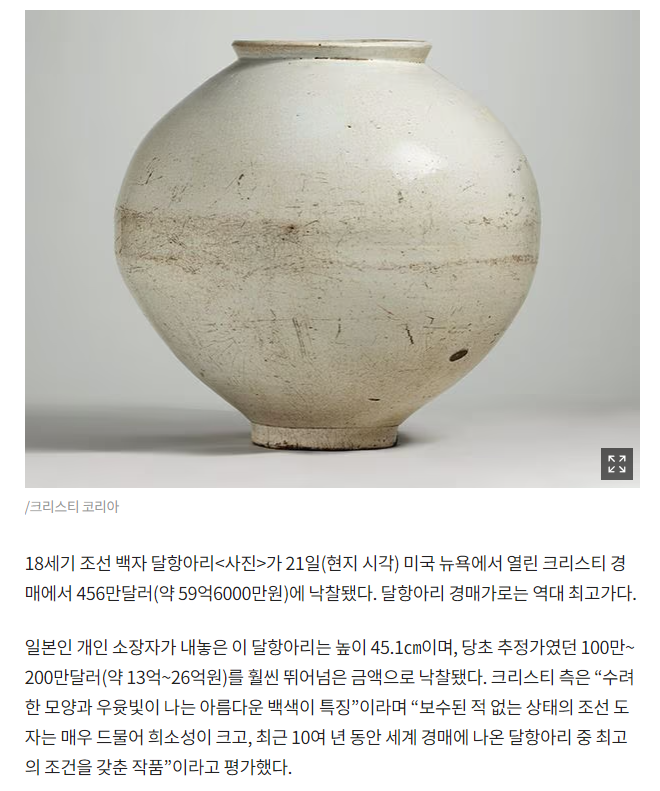
달항아리의 희소성과 가치는 국내외에서도 크게 주목받고 있습니다. 2023년 미국 크리스티 경매에서 높이 45.1cm의 달항아리가 456만 달러(약 60억 원)에 낙찰되었습니다. 이 항아리는 그보다 더 큰 높이 52cm로 제작되었으며, 완성도가 뛰어나 희소성과 조형적 측면에서 가치가 더 높을 것으로 예상됩니다. 특히 공개된 달항아리들 가운데 이와 같이 큰 크기에 온전한 상태를 유지한 사례는 거의 유일합니다.
달항아리는 주로 17세기 후기부터 18세기 전기, 영·정조 시대에 사옹원 분원(경기도 광주 일대)에서 제작되었습니다. 왕실 전용이었기에 생산량이 매우 적어 현존 수량도 20여 점에 불과하며, 이 가운데 7점이 국가지정문화재(국보 3점, 보물 4점)인 만큼 예술적, 역사적 가치가 높습니다.
━━━━━
这是18世纪朝鲜时代制作的白瓷月亮罐。这件白瓷月亮罐高达52厘米,属大型器物,但形态稳固、保持完整的平衡,是罕见的例子。器身曲线稳定,没有变形,尤其是口径与底径相若,突显了形态的稳重感和比例美。器身中部的接合线采用上下分开制坯再合并的传统制作方式,充分体现了古代工艺特点。
其名称“月亮罐”源于其色泽与造型仿佛怀抱满月,高度在40厘米左右属大型器物,因此得名。白瓷月亮罐是朝鲜时代代表性的白瓷器之一,为无纹纯白瓷器,象征韩国美学的文化遗产。
器表的流釉痕迹是由于柴窑烧制时的不规则热流和空气流动自然形成的,并非人为设计,这显示了当时窑炉环境的真实状态。
月亮罐在烧制过程中会收缩约20~25%,因此在初烧成型阶段必须考虑更大的尺寸和精确比例。即便是微小偏差,也可能导致重心不稳、形态变形,制作难度极高。然而,这件月亮罐克服了这些困难,完成度非常高。
月亮罐的稀有性和价值在国内外都备受关注。2023年,美国佳士得拍卖会上,一件高45.1厘米的月亮罐以456万美元(约合60亿韩元)成交。这件月亮罐高度达52厘米,且完成度极高,其稀有性和造型价值预计更高。特别是在已公开的月亮罐当中,如此体量巨大且保存完好者几乎是独一无二的。
月亮罐主要在朝鲜17世纪后期至18世纪前期,即英祖、正祖时期,由司饔院分院(现京畿道广州一带)制作。由于曾为皇家专用,产量极少,现存数量仅约20件,其中7件为国家指定文化遗产(国宝3件、宝物4件),具有极高的历史价值。
━━━━━
This white porcelain moon jar was produced in the 18th century during the Joseon dynasty. Despite its large size, standing 52 cm high, it is a rare example that maintains perfect balance without any collapse of form. The body follows a stable curve without distortion, and the diameters of the mouth and the foot are almost identical, which enhances the sense of structural stability and harmonious proportion. The joint line around the middle of the body clearly shows the traditional production method of throwing the upper and lower parts separately and then joining them together.
The name derives from its color and form, which seem to contain the image of a full moon, as well as from its large size, typically around 40 cm in height. Among Joseon white porcelains, the moon jar is an undecorated, pure white jar and is regarded as a cultural heritage object symbolizing Korean aesthetics.
The traces of glaze that have run down the surface were naturally formed during firing in a wood-fired kiln, caused by irregular heat and air currents. These are not the result of intentional manipulation, but rather features that directly reveal the kiln environment of the time.
Because a moon jar shrinks by about 20–25% during firing, it must be shaped at the initial stage with a larger size and precise proportions in mind. Even a small error can disrupt the balance of weight and cause the form to deform, making the production process highly demanding. This jar overcomes such technical difficulties and achieves a high level of completion.
The rarity and value of moon jars have drawn considerable attention both in Korea and abroad. In 2023, a moon jar measuring 45.1 cm in height was sold for 4.56 million USD (approximately 6 billion KRW) at Christie’s in the United States. This jar, at 52 cm in height, is larger than that example, and given its high degree of completion, it is expected to have greater value in terms of both rarity and sculptural qualities. Among the moon jars that are publicly known, examples of this size that have survived in such intact condition are virtually unique.
Moon jars were mainly produced from the late 17th to the early 18th century, particularly during the reigns of Kings Yeongjo and Jeongjo, at the Bunwon kilns of the Office of Royal Provisioning (Saongwon) in the Gwangju area of Gyeonggi Province. As they were made exclusively for the royal court, production numbers were very low, and only about twenty examples are known to survive today. Of these, seven have been designated as state-designated cultural properties in Korea (three as National Treasures and four as Treasures), reflecting their high artistic and historical value.