본문
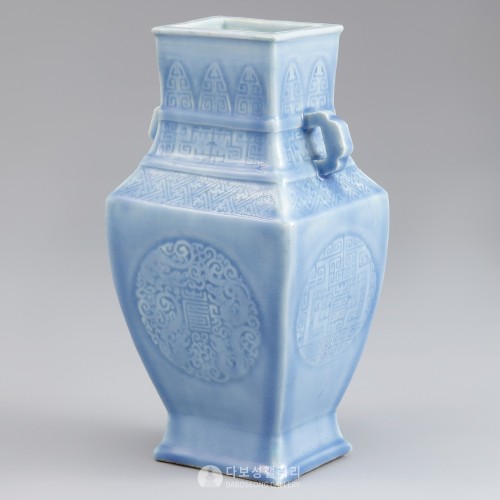
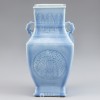
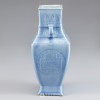
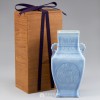
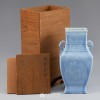
청 건륭 시기에 제작된 쌍이 병(雙耳甁)입니다. 저부로 갈수록 좁아지는 사각 기둥 형태이며, 양측에는 귀를 부착하였습니다.
문양은 양각 기법으로 입체감을 주었습니다. 목 상단에는 파초엽문(芭蕉葉紋)을, 하단에는 기룡문(夔龍紋)을, 어깨에는 만자금지문(卍字錦地紋)을 둘렀습니다. 몸체의 넓은 면에는 용 문양을, 측면에는 봉황 문양을 배치하였으며, 모두 '壽(수)'자 문양을 감싸고 있습니다.
기룡은 고대의 용 문양으로 권위와 부귀를 상징합니다. 만자금지문은 장수와 복을 기원하는 뜻을 담고, 용과 봉황의 조합은 음양의 조화와 화합, 태평성대를 상징합니다.
전면에는 월백유(月白釉)를 시유하였습니다. 달빛처럼 희고 은은한 푸른빛이 특징이며 청대 궁정 자기를 대표하는 유색 중 하나입니다. 문양의 높낮이에 따라 유약의 두께가 달라지면서 색조의 농담이 자연스럽게 나타납니다.
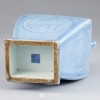
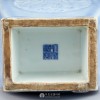
굽 바닥에는 '大清乾隆年製(대청건륭년제)' 명문이 있어 제작 시기를 알 수 있습니다. 형태와 문양, 시유 상태 등을 고려할 때 청나라 관요에서 제작된 것으로 추정됩니다. 또한 고대 청동기의 특징을 모방한 방고제형(倣古制形)의 특징을 보이며, 고대 전통과 예제를 중시했던 청나라 황실의 문화적 경향을 반영합니다.
━━━━━
此瓶烧造于清乾隆时期。器形呈四方柱状,下部渐收,两侧附有双耳。
纹饰采用浮雕工艺,富有立体感。颈部上方饰芭蕉叶纹,下方饰夔龙纹,肩部环饰万字锦地纹。器身宽面饰龙纹,侧面饰凤凰纹,均环绕“寿”字纹展开。
夔龙为中国古代传统龙纹之一,象征权威与富贵。万字锦地纹寓意长寿与福瑞,龙凤组合则象征阴阳和谐、和合昌盛与太平盛世。
器表通体施月白釉。其釉色如月光般洁白柔和,泛有淡雅青色,为清代宫廷瓷器最具代表性的釉色之一。由于纹饰高低起伏不同,釉层厚薄随之变化,呈现出自然丰富的色彩浓淡层次。
圈足底部书有“大清乾隆年製”款识,可知其烧造年代。综合其器形、纹饰及施釉特征,推测为清代官窑烧造之作。此外,本器具有仿古制形的特点,其造型借鉴古代青铜器风格,反映了清代皇室崇尚古制、重视礼制传统的文化取向。
━━━━━
This twin-handled vase was produced during the Qianlong reign (1736–1795) of the Qing dynasty. It has a square-section body that gradually tapers toward the base, with a pair of handles attached to either side.
The decoration is executed in relief, creating a strong sense of depth and texture. The upper neck is adorned with banana-leaf motifs, while the lower neck features kuilong motifs. Around the shoulder runs a wan-character diaper pattern. The broad faces of the body are decorated with dragons, and the narrower sides with phoenixes, each surrounding the character shou, a traditional symbol of longevity.
The kuilong, an ancient dragon motif, represents authority and prosperity. The wan-character diaper pattern conveys wishes for longevity and good fortune, while the combination of dragon and phoenix symbolizes the harmonious balance of yin and yang, as well as peace and prosperity.
The vase is covered with a clair-de-lune glaze, a distinctive pale blue glaze prized in Qing imperial porcelain. The varying thickness of the glaze over the raised decoration creates subtle tonal gradations, enhancing the three-dimensional quality of the design.
The base bears a six-character Qianlong reign mark, indicating its date of production. Based on its form, decorative motifs, and glazing technique, the vase is thought to have been produced at the imperial kilns of the Qing dynasty. It also reflects the tradition of emulating ancient bronze ritual vessels, embodying the Qing court's admiration for antiquity and its emphasis on classical traditions and ritual culture.