본문
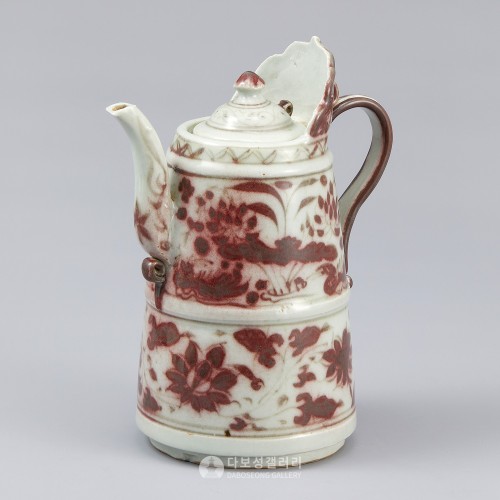
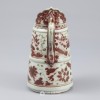
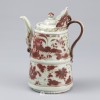
원나라 말, 명나라 초에 제작된 유리홍(釉裏紅) 승모주자(僧帽注子)입니다. 구연부 일측이 꽃잎형으로 솟아 비대칭을 이루며, 그 형태가 승려의 모자를 닮아 승모형(僧帽形)이라 지칭합니다. 원대 티베트 불교 문화의 영향이 반영된 독특한 형태입니다.
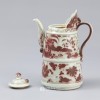
하단이 벌어지는 원통형 몸체에 주구(注口)와 손잡이를 부착하였으며, 돌출된 띠를 둘렀습니다. 뚜껑에는 작은 꼭지형 손잡이를 두었으며, 뚜껑과 주구 하단, 손잡이 상단에는 작은 고리를 달았습니다. 이는 끈 등을 연결하여 뚜껑의 유실을 방지하기 위한 용도로 추정됩니다.
문양은 모두 유리홍 기법으로 시문하였습니다. 구연부의 돌출면에는 당초문(唐草文)을, 몸체 상단에는 연지원앙문(蓮池鴛鴦文)을, 하단에는 모란문(牡丹文)을 배치하였습니다. 각 문양은 번영, 다산과 화합, 부귀와 영화 등을 상징하여 길상 의미를 더하였습니다.
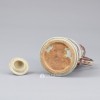
유리홍은 유약 아래 산화동 안료로 붉은 문양을 표현하는 유하채(釉下彩) 기법입니다. 굽에는 유약을 시유하지 않아 태토가 드러나며, 굽바닥에는 모래받침 흔적이 확인됩니다.
고도의 소성 기술이 요구되는 유리홍 기법을 섬세하게 구현하였으며, 독특한 형태와 정교한 제작 수준으로 보아 왕실 및 상류층에서 사용된 유물로 추정됩니다.
━━━━━
此为元末明初时期制作的釉里红僧帽壶。口沿一侧呈花瓣状上扬,呈不对称造型,其形态酷似僧侣所戴的帽子,因此被称为僧帽壶。这一独特器形反映其受到该时期藏传佛教文化影响。
器身呈下部外撇的圆筒形,其上附有流口与把手,并饰有凸起弦纹。盖顶置钮,盖和流口下端及把手上端均附有小系。推测其用途为连接绳索等,以防止壶盖遗失。
通体以釉里红技法绘制纹样。口沿凸出处饰缠枝纹,器身上部饰莲池鸳鸯纹,下部饰牡丹纹。各类纹样分别寓意繁荣、多产与和合,以及富贵荣华等吉祥含义。
釉里红是以氧化铜颜料于釉下表现红色纹样的釉下彩技法。底足无釉露胎,并有垫砂烧造痕迹。
该器以需高度烧成技术的釉里红工艺精细烧制而成,结合其独特造型与精湛制作水平,推测为王室及上层阶级所使用的器物。
━━━━━
This underglaze copper red monk's hat-shaped ewer dates to the Late Yuan Dynasty, early Ming Dynasty. Its rim rises on one side in a petal-like form, creating an asymmetrical silhouette known as the "monk's hat" shape for its resemblance to a monk’s headwear. This unique form is a distinct reflection of the Tibetan Buddhist cultural influence prevalent during the Yuan period.
The vessel features a cylindrical body that widens at the base, fitted with a spout and a handle and accented by raised horizontal bands. The lid is topped with a small knob-shaped handle, and small loops are attached to the lid, the base of the spout, and the top of the handle. These loops are presumed to have been used to secure a cord to prevent the loss of the lid.
All decorations are rendered in the underglaze copper red technique. Vine scrolls are positioned on the raised section of the rim, while the upper body features mandarin ducks in a lotus pond, and the lower body is adorned with peonies. Each motif adds auspicious meaning, symbolizing prosperity, fertility, harmony, and wealth.
Underglaze copper red is an underglaze decoration technique that uses copper oxide pigment to create red patterns beneath the glaze. The foot is unglazed, revealing the clay body, and traces of sand-supported firing are found on the base.
The underglaze copper red technique, which requires advanced firing expertise, is delicately executed. Given its unique form and sophisticated level of craftsmanship, it is presumed to be an artifact used by the royal court or the elite class.